

In Fukushima City, an initiative to train young doctors using surgical training simulators was introduced.
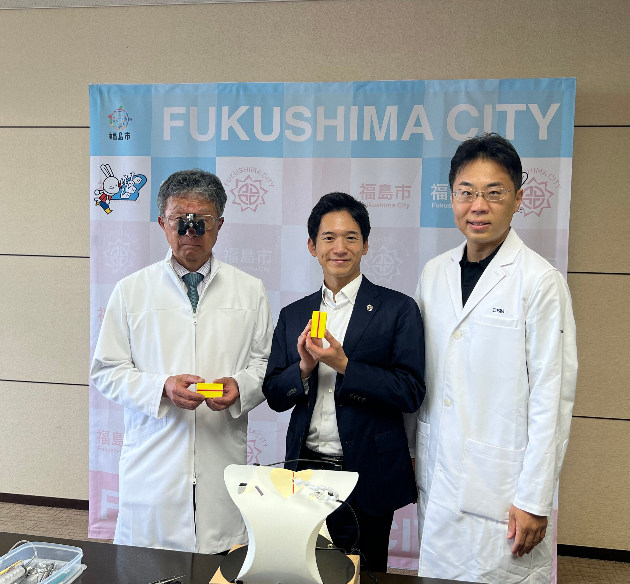
On July 3, 2026, EBM Co., Ltd. had the opportunity to present its research and development initiatives in Fukushima City and the potential of using surgical training simulators to train young doctors at the Fukushima City Hall.
This initiative aims to share the potential for physician training using surgical simulators, regional industrial development, and collaboration with medical and educational institutions within the city, through our medical education technology, which is based at our research and development base in Fukushima City, and through examples of its use in education at Ota General Hospital.
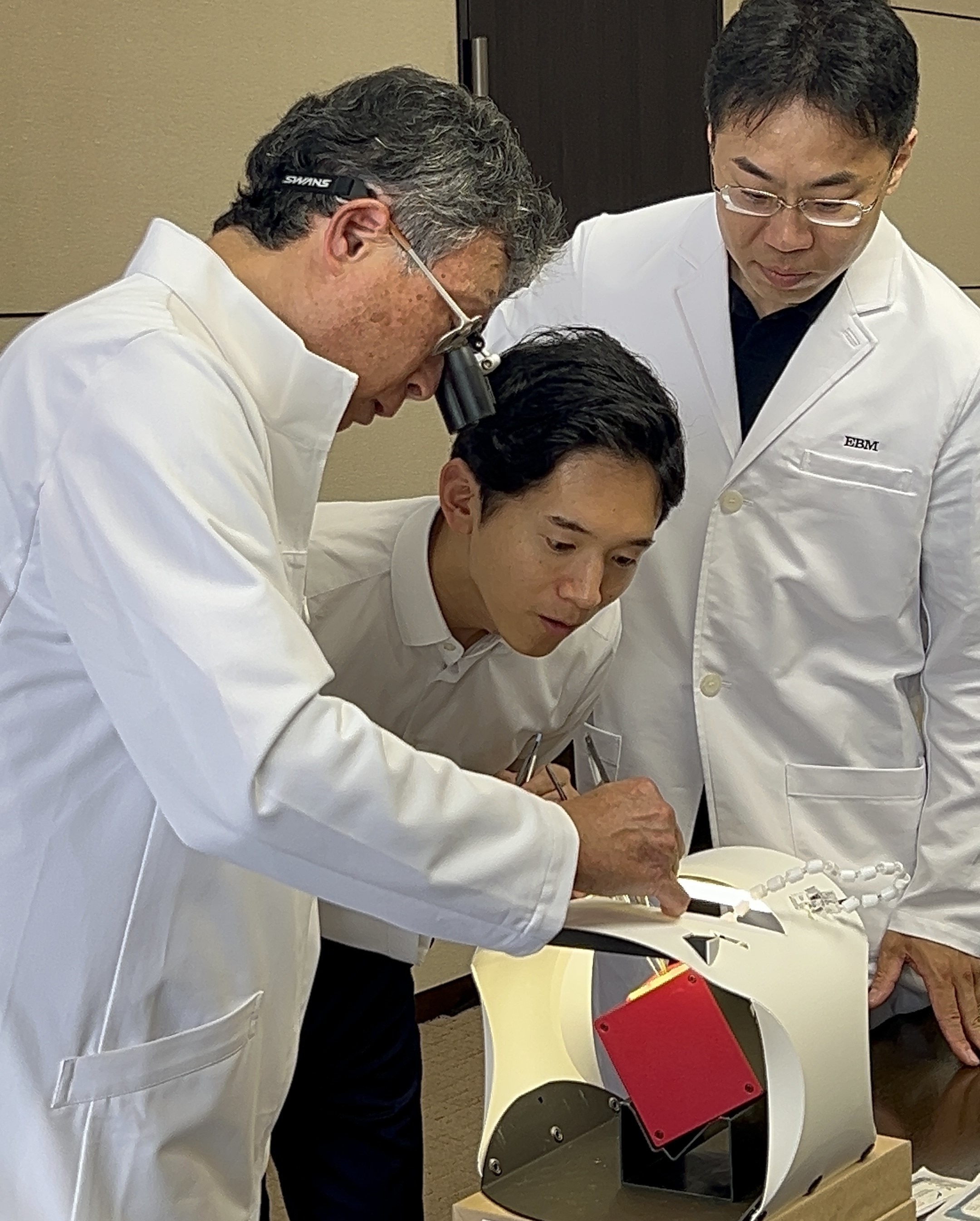
On that day, we used the cardiovascular surgery simulator "YOUCAN" and the heartbeat reproduction simulator "BEAT" to explain the significance of simulation-based training, which allows for safe and repetitive practice in an environment close to actual surgical procedures.
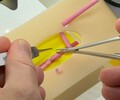
YOUCAN is a training model designed to simulate the approximately 2mm diameter vascular anastomoses required for coronary artery bypass surgery, allowing users to experience delicate needlework, suture handling, and manipulation of the blood vessel wall.
In recent years, opportunities for young doctors to gain gradual experience in surgical techniques in clinical settings have become limited due to factors such as the increasing sophistication of surgical techniques, the spread of minimally invasive surgery, work-style reforms, and constraints on training time in the operating room. In this context, simulator training, which allows trainees to safely experience failure, repetition, and feedback without burdening actual patients, has become an important educational method for acquiring surgical skills.
In an experience program for resident physicians conducted at Ota Nishinouchi Hospital, positive feedback was received, such as "I became interested in surgery," "I saw a path to improvement through practice," and "I can now consider becoming a surgeon as one of my career options." This suggests that simulation-based education has the potential to contribute to fostering interest in surgery and improving self-efficacy.
Since our founding in 2006, we have been engaged in the development, manufacturing, and sales of surgical training simulators for cardiac surgery and endoscopic surgery, as well as providing equipment and operational support for academic conferences and training sessions. Moving forward, we will continue to contribute to the creation of a new educational model that allows young doctors to experience the appeal of surgery and supports the training of surgeons throughout the region, through medical education technology originating from Fukushima.
Implementation Overview
Date and time: Friday, July 3, 2020 1:30 p.m.
place: Mayor's Reception Room, Fukushima City Hall Main Building
Contents:
・Introduction of EBM Co., Ltd. and its research and development initiatives in Fukushima City
- The current shortage of surgeons and the potential of using surgical simulators to train doctors.
• Examples of educational use at Ota General Hospital
- Collaboration plan with clinical training hospitals and educational institutions in Fukushima City
Demonstrations of cardiovascular surgery simulators, etc.
Equipment used:
・ YOUCAN: Coronary artery bypass surgery training model Ru
・ BEAT: Heartbeat Simulation Simulator